
How to Create a Remote Life
(Without Burning Everything Down)
Most people treat this as a leap. It isn’t. It’s a sequence — income, skills, runway, infrastructure — built in a specific order so nothing collapses when you move.
The first time I tried to make my income location-independent, I did it backwards. I quit before I had a second client. I moved before I had systems. I confused the feeling of freedom with the infrastructure of it — and spent three months rebuilding from a worse starting position than where I’d left. Creating a remote life is not a personality decision. It’s an engineering problem.
Done right, it doesn’t require burning anything down. It requires a sequence: the right income model first, then the skills that support it, then the financial runway that removes the pressure, then the infrastructure that makes it sustainable. The order matters. Skip one and the whole structure is unstable.
This is the system I’d use now — built from what worked, what failed, and what I’ve observed across multiple countries and income models. It’s designed to get you location-free by design, not by accident.
What a Remote Life Actually Is
A remote life is not the same as being a digital nomad, and conflating the two causes a lot of unnecessary chaos. Digital nomad implies constant movement — a new city every few weeks, hostels, hustle content. That’s one version. It’s not the only one, and for most people building serious income, it’s not the most functional one.
A location-free life means your income isn’t tied to a physical location. What you do with that freedom is your design decision. It can look like slow-travelling through Europe for three months. It can look like splitting time between two countries. It can look like living rurally with city-level income. The point isn’t perpetual movement — it’s that geography stops dictating your choices.
That distinction matters before you build anything, because your income model, your infrastructure needs, and your transition timeline all depend on which version of freedom you’re actually designing for.
Define Your Version of Freedom
Before you change anything, get specific. Vague intentions produce vague results. Four questions that actually sharpen the target:
- Full-time travel or home base? Continuous movement is operationally expensive — frequent flights, accommodation variability, connectivity uncertainty. A home base with periodic travel is often more productive and more affordable.
- High income + flexibility, or low expenses + simplicity? Both are valid. They require very different income models and timelines.
- 20 hours of work or 40? This determines which income model is viable — and which lifestyle is sustainable alongside it.
- Optimising for money, time, nature, or autonomy? Name the primary driver. When trade-offs come (and they do), this is how you make the decision.
Write the answers. Not in your head — on paper, or in a document. What you write, you commit to. What stays vague stays aspirational.
Choose Your Remote Income Model
There are four viable paths. Most people choose one and treat it as permanent. The more strategic move is to understand what each is good for — and sequence them deliberately.
Stable, predictable, and the fastest path to financial runway. Less schedule flexibility, but lower operational overhead. Best for the transition phase — not necessarily forever.
High flexibility, variable income. Works well when you have a high-value skill and an existing network. Requires active client management — income stops when you stop selling.
High upside, slower build. Affiliate sites, digital products, content platforms. Requires 12–24 months of investment before meaningful returns. The most scalable model — and the most commonly underestimated in timeline.
Stable income from employment or freelancing, running in parallel with scalable asset-building. The employment covers costs; the business builds compounding returns. This is the model that actually survives the first year.
The common failure is going all-in on Model 03 before Models 01 or 02 are generating reliable income. Build security first. Build assets second. The sequence removes the financial pressure that makes early businesses fail.
Build a Skill Stack That Travels
Remote life rewards leverage. The skills with the highest leverage are those that can be applied digitally, sold internationally, and compounded over time. Learning a skill is necessary but not sufficient — what converts skill into income is proof of application.
The combination that opens the most doors: one technical skill (SEO, development, data) + one communication skill (copywriting, video, design). Technical gets you hired. Communication gets you clients and builds your own platform simultaneously.
Skill without proof is a hobby. Build case studies. Document outcomes. Create a digital footprint that shows the result, not just the capability.
Build Financial Runway
This is the step most people skip because it’s the least exciting. It’s also the one that determines whether the rest of the system survives contact with reality.
- 6–12 months of living expenses saved — not invested, not in crypto, accessible.
- Fixed costs reduced — subscriptions, leases, commitments. Fewer fixed costs means your runway lasts longer under lower income.
- High-interest debt cleared — compounding interest in the wrong direction is a structural problem that doesn’t improve with a change of address.
- Travel banking set up — a multi-currency card (Wise is what I use), a backup card from a separate provider, and a clear ATM withdrawal plan. The full banking setup guide is here.
Freedom infrastructure includes financial infrastructure. The money setup is part of the system — not an afterthought.
Design Your Infrastructure
Location independence is only as stable as the infrastructure beneath it. Three layers that need to be in place before you move — not assembled on arrival.
The minimum viable tech stack for remote work from anywhere:
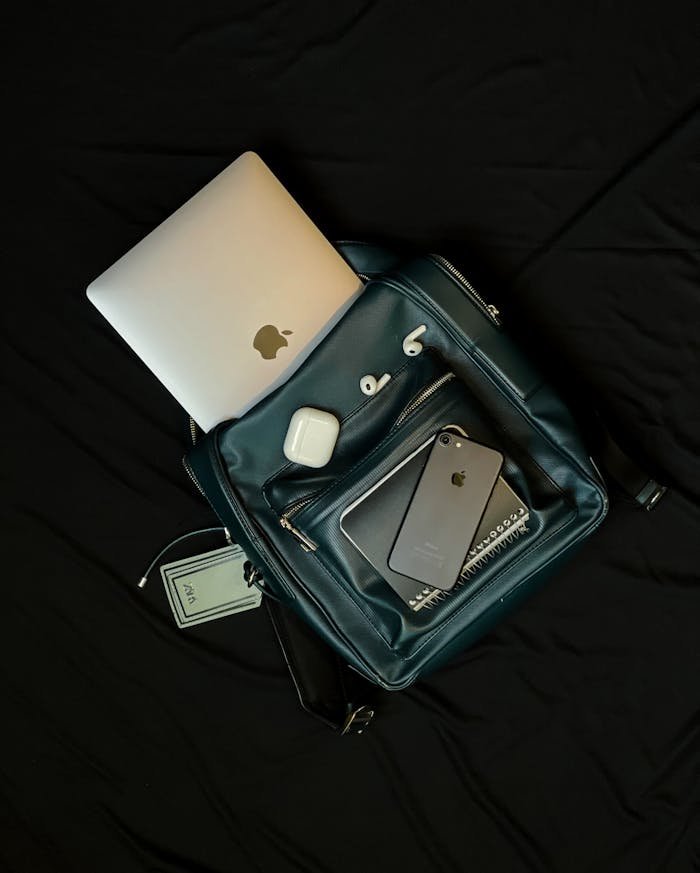
- Laptop — reliable, not underpowered. Your primary income-generating tool.
- Power bank — laptop-compatible, airline-approved. The full power bank comparison is here.
- Travel router — converts unreliable hotel WiFi into a stable private network. Not optional if you’re doing calls from accommodation.
- Cloud backup — every file lives in two places. A hardware failure should not cost you client work.
- Password manager — when you’re logging into accounts from new devices and networks, this is security infrastructure, not a convenience feature.
- Time-blocking calendar — when your environment changes constantly, your schedule is the anchor.
- Automated invoicing — income should not depend on you remembering to chase it.
- Financial tracking — across currencies, across countries, in real time. A Notion table works. What doesn’t work is estimating.
- Connectivity backup plan — an eSIM with tethering support, a travel router, and a coworking space pre-identified in every city. See the full connectivity stack guide.
This is the layer most people treat as optional until it becomes urgent. Residency rules, visa restrictions, business structure, and banking across countries are not exciting topics. They are also not recoverable problems when they surface mid-trip. Research your situation before you move — not after.
Choose Your First Test Location
The instinct is to pick somewhere dramatic for the first move. Don’t. The first location is a pilot program — it’s a test of your system under real conditions, not a commitment to a lifestyle you haven’t validated yet.
- Internet quality — not the advertised speed, the actual speed during your working hours.
- Productivity output — are you producing the same volume of work? More? Less? The environment has a real effect.
- Time zone friction — if your clients or employer are 8 hours away, what does that actually cost your schedule?
- Energy levels — travel is stimulating and depleting simultaneously. Know your pattern before you commit to a longer stint.
- Loneliness vs. excitement ratio — the first two weeks often feel like a holiday. Weeks three and four are the more honest signal.
Start somewhere low-cost, low-stakes, and close enough to abort without significant disruption. Optimise for learning, not for content.
Build Community Before You Need It
Remote life is structurally isolating. The physical anchors — an office, a commute, daily incidental contact — disappear. What replaces them has to be deliberate, because it won’t happen by accident. The people who burn out in the first year almost always cite isolation, not income, as the primary driver.
- Online communities — specific and high-signal. Not general digital nomad groups; communities built around your specific work or interests.
- Coworking routines — even one or two days a week in a coworking space changes the texture of the work week. Schedule it, don’t leave it to mood.
- Physical structure — fitness, a morning routine, anything that creates rhythm. Freedom without rhythm becomes drift.
- Accountability relationships — one or two people who know your actual goals and will notice if you’re off track.
Build Assets, Not Just Income
Remote employment and freelancing are location-independent. They are not, however, passive. When you stop working, income stops. The next stage of the system is building income streams that don’t require your daily presence — assets that compound.
- Affiliate content sites — SEO-driven content that earns commission on reader purchases. Slow to build, durable once established.
- Digital products — guides, presets, templates, courses. Created once, sold repeatedly.
- Email funnels — owned audience. Platform-proof. The one asset no algorithm change can remove.
- Content platforms — YouTube, long-form social. Compounding attention over time.
The transition is from “remote worker” to “location-independent asset builder.” The second version generates income whether you’re at your desk or on a bus through the Andes. That’s the design target — not just working remotely forever, but building things that work when you don’t.
Five Mistakes That Collapse the System
The geography change does not fix an income problem. A freelance pipeline that’s inconsistent in your home country will be more difficult to manage from a different time zone with unreliable WiFi. Stabilise the income first. Then move.
Income should be covering costs reliably for at least 3 months before you change location. Not just once — consistently.
Choosing a location because it looks good in photos. Buying gear because it looks professional. Building a brand before you have a product. The aesthetic layer comes after the functional layer, not before.
For every decision, ask: does this make the system more functional, or just more visible?
Tax residency is not automatic. Working remotely across countries creates obligations that vary significantly by jurisdiction. Discovering this retroactively is expensive. It’s also entirely avoidable with one conversation with an international tax advisor before you move.
Research residency and tax rules for your first destination before departure. Consult a professional if your situation is complex.
Trading time for money is location-independent but not scalable. If every dollar you earn requires an hour of your time, you’ve relocated the job — you haven’t replaced it. True location freedom comes from income that doesn’t scale linearly with your hours.
Start building one asset-based income stream in parallel with your active income from month one. Even if the returns are small initially, the compounding starts now.
Remote life amplifies your existing patterns — both productive and avoidant. If discipline is already a struggle, removing the external structure of an office makes it harder, not easier. The freedom isn’t the reward. The system is.
Audit honestly: are you moving toward a better working structure, or away from one that isn’t working? The former is sustainable. The latter relocates the problem.
The 12-Month Transition Timeline
Identify your income model. Begin skill-building in the chosen stack. Start a side income test — freelance, affiliate, or digital product. Don’t move yet. Build the runway.
Increase remote income. Save aggressively — 6 months minimum before a significant location change. Set up travel banking, tech infrastructure, and legal/tax research. Take a short domestic test trip to validate your working setup.
Choose a low-stakes first location. Run it as a pilot — 3–4 weeks minimum. Measure productivity, connectivity, energy, and social infrastructure. Optimise the working setup based on real data, not assumptions.
Scale the income streams that are working. Begin building your first scalable asset (content platform, affiliate site, digital product). Plan the next location with full infrastructure — connectivity, coworking backup, banking, community.
- Travel Banking Setup for Women Travelling Abroad — the exact financial system to put in place before any trip
- How to Stay Connected While Working Remotely — the full connectivity stack: eSIM, travel router, VPN, and coworking backup
- The Freedom Infrastructure Kit — every piece of gear tested for remote work from anywhere
Action Checklist
Run this in sequence — not all at once
- Write your non-negotiables — travel style, income target, hours, primary priority
- Choose your income model — and identify the transition path between where you are now and where you’re going
- Identify one high-value skill to build — and start generating proof of results, not just learning
- Build 6 months of living expenses — before making any significant location change
- Set up your travel banking stack — multi-currency card, backup card, ATM plan, spending tracker
- Assemble your tech infrastructure — laptop, power bank, travel router, cloud backup, password manager
- Research tax and residency rules — for your first intended destination, before you land
- Run a 3–4 week pilot trip — measure output, not just experience
- Start one scalable asset — content, affiliate, digital product — in parallel with active income from month one
Save This as a Printable Checklist
Drop your email and I’ll send the checklist as a PDF — plus the full remote work gear list I travel with. One email. Updated when anything changes.
Engineering your freedom is not a single decision. It’s a sequence of infrastructure decisions, made in the right order, that compound into a life that doesn’t require a fixed address to function. The system above is the order. What you bring to it is the consistency.
If you’re ready to move from system to gear — the tools that make this life actually work in practice — the Freedom Infrastructure Kit covers every piece of equipment I’ve tested across multiple countries and why each earns its place in the bag.
Next: the full connectivity stack I’m taking into Peru, Bolivia, and Chile for 35 days — including what happens to your eSIM signal at 4,600m above sea level on the Salkantay Trek.